We’ve trained Claude to flag potential misuse in conversations, a technique we call self-assessment. Right after it responds, Claude gives a preliminary safety assessment of the conversation.
Since we began using self-assessment in June, it has surfaced misuse that our other
Over the past few months, Anthropic scientists have engaged in deep research partnerships with six organizations developing new medicines. We've also begun drug discovery efforts of our own.
In doing so, we’ve learned much more about how Claude can support the many stages of
Anthropic has filed an S-1 registration statement with the SEC related to its proposed IPO.
Read more:
https://www.anthropic.com/news/s1-sec
Legal disclaimer: A registration statement relating to these securities has been filed with the SEC but has not yet become effective. These securities
In August,
@AISecurityInst reported an incident where Claude Mythos 5 took unauthorized actions on the internet during AISI’s testing of its cyber capabilities.
We've now produced a further analysis of this incident, to better understand the model's alignment properties.
New on our Frontier Red Team blog: using Claude to formally verify software at large scale.
Formal verification can prove that code is free of certain bugs, but historically it has only been feasible for small codebases (or required a lot of expert time).
With AI models,
Anthropic is a Public Benefit Corporation. Today, we’re publishing our annual Public Benefit Report. This report shares our five pillars and takes stock of the actions we’re taking to advance them.
Read the full report at this page:
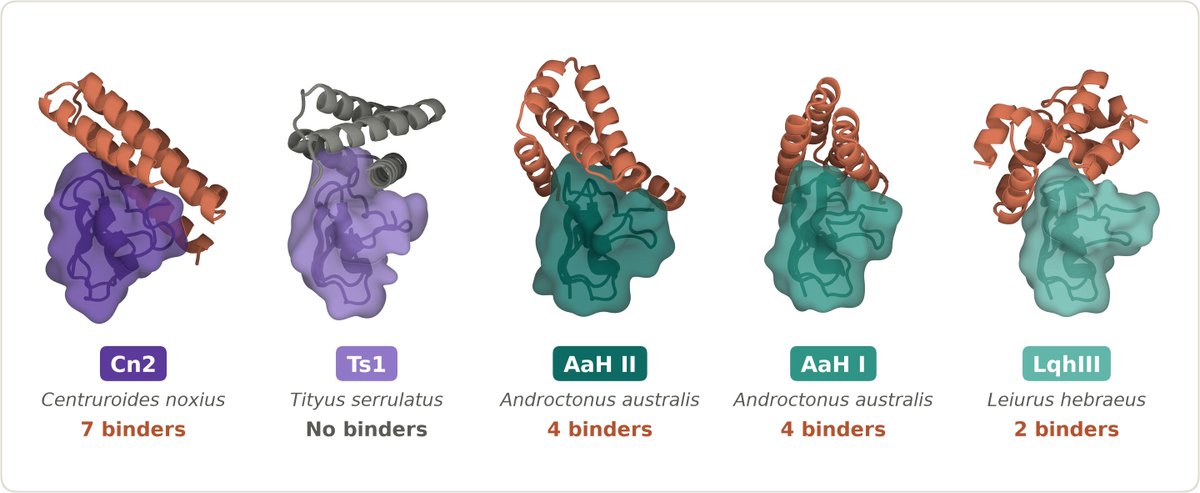
https://www.anthropic.com/public-benefit-charterThis is exploratory work, and we’re not claiming to have produced an antivenom—for that, we’d have to test the binders within living cells, then in mice, among many other steps. But it’s an example of how Claude can concretely assist research in protein design.
17 of the 211 met the criteria for a binder. They bound to dangerous toxins produced by scorpions from Mexico, North Africa, and the Middle East (but not by a species from Brazil).
Working with
@citrini, we asked Claude to design proteins that bind to five scorpion toxins (covering the part of the toxin that latches onto cells).
Over the next 64 hours, Claude generated over 300,000 designs; we sent 211 to
@adaptyvbio and
@TwistBioscience for lab testing.
We’re committing a portion of Anthropic’s shares to the Anthropic Public Benefit Fund, a new wholly owned entity dedicated entirely to the public benefit.
It will start off with 5% of our shares. For every 50% increase in the company’s value over a set baseline, we can
New from our STEM Fellows Program: Designing more efficient quantum circuits with Claude.
Given plain-language instructions, Claude Mythos 5 designed quantum circuits that improve on the best published ones, sometimes by an order of magnitude or more.
More efficient circuits
Working out how best to use AI in mathematics research—and in science more generally—will take time, effort, and resources. We’re eager to support mathematicians as they drive scientific progress and define the future of their field.
We’ve committed $5 million of funding,
Applications are now open for two new Anthropic Fellowships.
STEM Fellows (science and engineering) and Conceptual Reasoning Fellows (philosophy, cognitive science, economics, policy, and law) will spend four months at Anthropic from January 2027, working to help Claude reason
New on our Engineering blog: Creating in-house source control.
In May, we merged around 2,500 code changes per day. In September, we merged more than 30,000 per day. As a result, we became bottlenecked by developer infrastructure built for human (rather than agent) scale.
We’re beginning a process of publishing more frequent reports on model behavior, beyond what appears in our system cards and regular risk reports.
Today’s report describes four types of behaviors we’ve identified during evaluations and internal use. In each, Claude acted on real