
In my previous "Claude Code Usage Report" (click here) article, I mainly documented the process of, on Ubuntu servers, using Claude Code to modify the aifuns.xyz frontend, as well as the performance and cost when heavily calling the Sonnet model. This article is a continuation of that experience, stemming from an in-depth conversation between me and a platform user. This conversation not only gave me a clearer understanding of AIFUNS 's pricing mechanism, but also made me re-understand the differences between the various Claude mirror services.
I. Where the Conversation with the User Began
That day, while I was reviewing the Claude Code usage data, a user proactively messaged me asking: ‘Max +Pro membership, how much quota per day?’. He told me he was a trial user and wanted to understand the specific billing method and usage limits. This seemingly ordinary question gradually unfolded into an in-depth discussion about AI service ecosystems, stability, and cost structures.
II. Discussing Quotas and Pricing
He explained that the current Claude Code mirror is divided into Max 5x and Pro modes, both running on the official account system, differing only in the number of uses. He mentioned: ‘480 this uses the 200-dollar Max account; what the backend now runs is Max 5x and Pro, but all are official accounts.’
During the conversation, we together reviewed the data from my previous article: within 5 hours I made 400 requests, which roughly corresponds to the limit of a Max 5 x account. He told me that the current mirror membership has been adjusted so that 480 yuan corresponds to 360 requests, and 240 yuan corresponds to 240 requests, which works out to roughly 1 USD ≈ 1.95 RMB.
III. Usage Cost and Comparative Analysis
Combining my own usage experience (600 requests cost about 26 USD, i.e. about 0.043 USD each), we recalculated the usage cost of the mirror version of Claude Code :
【Mirror Claude Code Pro Monthly Membership】every 8 hours 240 requests, three quotas per day equals 720 requests, equivalent to a daily consumption of 30.96 USD, roughly 936 USD of quota per month.
He admitted that this pricing isn't exactly cheap, but it offers more of a guarantee in terms of stability——‘the official 200 USD, while being 20 x the quota, carries too high a ban risk. We guarantee you can use it, but cannot guarantee refunds for usage.’
IV. Platform Comparison and Industry Landscape
During the conversation, he also provided a highly valuable comparison table listing the monthly usage quotas and actual RMB prices of different AI platforms, from UniVibe to AIFUNS, covering ten mainstream service providers:
|
Platform |
Monthly Usage Quota(USD) |
Actual Amount(RMB) |
Ratio |
|
UniVibe |
3456 |
1199 |
0.35 |
|
88Code |
5100 |
888 |
0.17 |
|
pincc.aiCarpool |
532 |
398 |
0.75 |
|
ctok.ai Carpool |
1200 |
398 |
0.33 |
|
Claude.ai (Official) |
3200 |
1750 |
0.55 |
|
AI Coding Home |
1200 |
559 |
0.47 |
|
AIGoCode |
480 |
399 |
0.83 |
|
AIShared Rental |
1200 |
398 |
0.33 |
|
YesCode |
1000 |
298.2 |
0.30 |
|
AIFUNS |
936 |
480 |
0.51 |
As the table shows, AIFUNS is positioned at a mid-range price point (ratio about 0.51), slightly cheaper than the official pricing, but the key lies in its service stability and account availability.
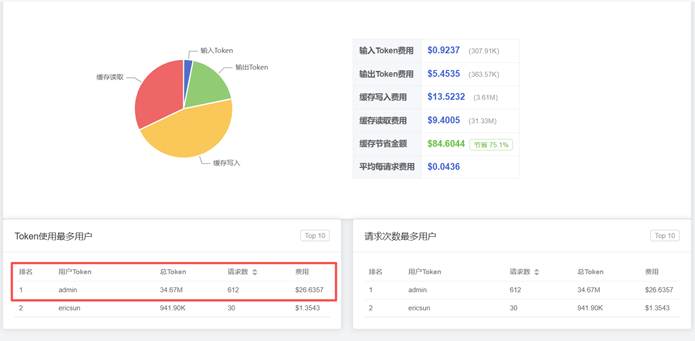
Figure 1: Claude Code Token usage and cost statistics (continued from the previous article)
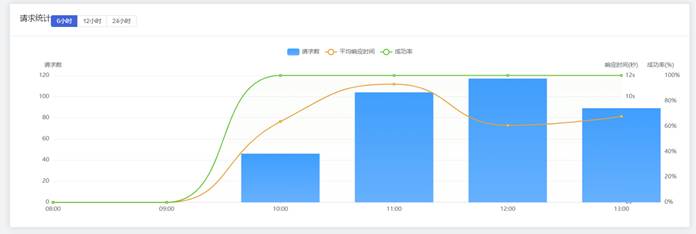
Figure 2: request statistics and response time (high-frequency usage performance)
V. My Reflections: Value Beyond Price
This exchange made me realize that the value of AI services lies not only in the cost of a single call, but more in whether the provider can guarantee long-term availability, continuous updates, account security, and stable speed. Although many low-priced platforms are strongly attractive in the short term, problems such as frequent bans, server fluctuations, and response delays can seriously affect the workflow.
AIFUNS chooses to find a balance between price and stability——this is perhaps the best embodiment of ‘moderate price, reliable service’. As the user put it: “88Code is the cheapest, but it's been down for two days already.”Such real-world cases are enough to illustrate one fact: for developers, being usable and stably usable matters more than being cheap.
VI. Conclusion
Through this exchange, I gained a more comprehensive understanding of the logic and risk control behind the Claude Code mirror ecosystem. AIFUNS does not pursue rock-bottom prices, but rather lowers the user threshold as much as possible while maintaining service continuity. In the future, I will continue to follow this platform's long-term performance and try to more systematically compare its usage experience with the official and other mirror platforms.
Note:This article was generated by ChatGPT 5.